A lot of people notice something frustrating as they get older: Their prescription seems to change more often. Maybe reading gets harder.Night driving feels worse.Screens become more tiring.Menus suddenly need “better lighting.” And many people wonder: “Why are my eyes changing so much now?” The answer is that your eyes naturally change over time—especially after …
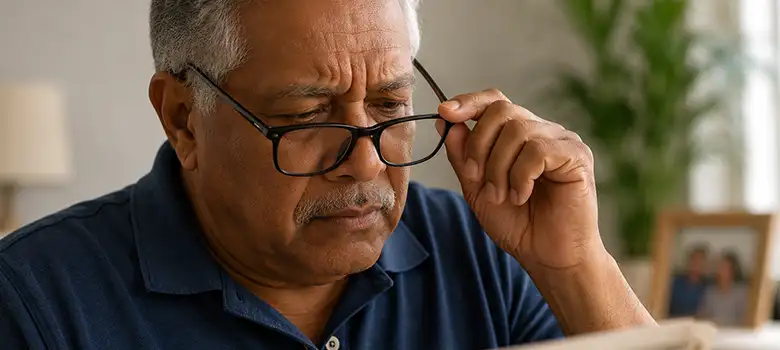
A lot of people notice something frustrating as they get older:
Their prescription seems to change more often.
Maybe reading gets harder.
Night driving feels worse.
Screens become more tiring.
Menus suddenly need “better lighting.”
And many people wonder:
“Why are my eyes changing so much now?”
The answer is that your eyes naturally change over time—especially after your 40s.
Your Eyes Age Just Like The Rest Of Your Body
The muscles and structures inside your eyes change as you age.
Over time, the eye becomes less flexible and has a harder time focusing quickly between:
- near objects
- far objects
- screens
- low-light environments
This is completely normal.
Reading Vision Usually Changes First
One of the biggest age-related vision changes is presbyopia.
This happens when the eye gradually loses the ability to focus up close.
Common signs include:
- holding phones farther away
- struggling with menus
- eye strain while reading
- needing brighter light
This usually becomes noticeable sometime in your 40s.
Night Vision Often Gets Worse Too
A lot of adults notice:
- more glare
- halos around headlights
- reduced sharpness at night
even while wearing glasses.
That can happen because:
- pupils react differently with age
- lenses inside the eye become less clear
- coating wear on glasses becomes more noticeable
Screen Time Makes Everything More Noticeable
Modern life puts constant pressure on our eyes.
Phones, computers, tablets, TVs…
all require long periods of focus.
As eyes age, screen fatigue becomes easier to notice, especially with outdated prescriptions.
Small Prescription Changes Can Feel Bigger Than They Used To
Even minor prescription shifts may feel dramatic over time.
That’s because older eyes often adapt less easily than younger eyes.
A tiny vision change that once went unnoticed may suddenly feel frustrating in everyday life.
Why Regular Eye Exams Matter More With Age
Many adults delay eye exams because they assume:
“I can still see okay.”
But gradual changes often happen so slowly that people adapt without realizing how much clarity they’ve lost.
Regular exams help catch:
- prescription changes
- eye strain issues
- age-related vision problems
- coating wear from older lenses
before they become major frustrations.
Sometimes the Problem Is the Lenses — Not Your Eyes
A lot of people assume their eyesight is getting dramatically worse…
when in reality:
- their lenses are scratched
- coatings are failing
- glare is increasing
- lens clarity has degraded over time
Fresh lenses alone can sometimes make vision feel dramatically sharper again.
Final Thoughts
It’s completely normal for prescriptions to change more often as you get older.
Your eyes naturally become less flexible over time, especially for:
- reading
- screens
- night driving
The important thing is staying proactive with both eye care and lens quality so your vision stays as comfortable and clear as possible.