Blue light glasses are everywhere. You see them advertised for: But here’s the real question: Do blue light glasses actually work — or are they just a trend? Let’s break it down clearly. What Is Blue Light? Blue light is part of the visible light spectrum. It’s naturally emitted by: Not all blue light is …
Blue light glasses are everywhere.
You see them advertised for:
- Reducing eye strain
- Preventing headaches
- Improving sleep
- Protecting long-term eye health
But here’s the real question:
Do blue light glasses actually work — or are they just a trend?
Let’s break it down clearly.
What Is Blue Light?
Blue light is part of the visible light spectrum. It’s naturally emitted by:
- The sun
- LED lighting
- Computer screens
- Smartphones
- TVs
Not all blue light is bad. In fact, blue light during the day helps regulate alertness and mood.
The concern isn’t blue light itself.
The concern is prolonged exposure to screens – especially at night.
Do Blue Light Glasses Reduce Eye Strain?
This is where things get interesting.
Most digital eye strain symptoms like:
- Dry eyes
- Blurred vision
- Headaches
- Neck tension
-> are caused by screen habits, not blue light itself.
When you stare at a screen:
- You blink less
- Your eyes stay fixed at one distance
- Your eye muscles stay engaged
That’s what creates fatigue.
Blue light glasses may reduce glare slightly.
But they don’t fix poor screen ergonomics or overuse.
What About Sleep?
This is where blue light filters actually matter.
Blue light exposure at night can interfere with melatonin production, the hormone that helps you fall asleep.
So:
- Using screens late at night
- Bright overhead LED lighting
- Phone use before bed
can delay sleep.
Blue light glasses worn at night may help reduce this effect.
But so can:
- Night mode on devices
- Lowering screen brightness
- Avoiding screens 60-90 minutes before bed
Glasses aren’t magic.
They’re a tool.
Do Blue Light Glasses Prevent Eye Damage?
There is currently no strong scientific evidence showing that normal screen exposure causes permanent retinal damage in healthy adults.
That’s important.
Marketing sometimes implies blue light from screens is dangerous long-term.
Right now, evidence does not support that claim.
The sun produces far more blue light than your phone ever will.
So Who Should Consider Blue Light Lenses?
Blue light filtering lenses may make sense if:
- You work 8+ hours per day on screens
- You experience noticeable glare
- You work late at night
- You feel more comfortable with a slight tint
But they are not mandatory for eye health.
They’re optional comfort lenses.
What Actually Reduces Digital Eye Strain?
If you want real relief, focus on:
- The 20-20-20 rule (every 20 minutes, look 20 feet away for 20 seconds)
- Proper screen distance
- Blinking intentionally
- Adjusting brightness to match room lighting
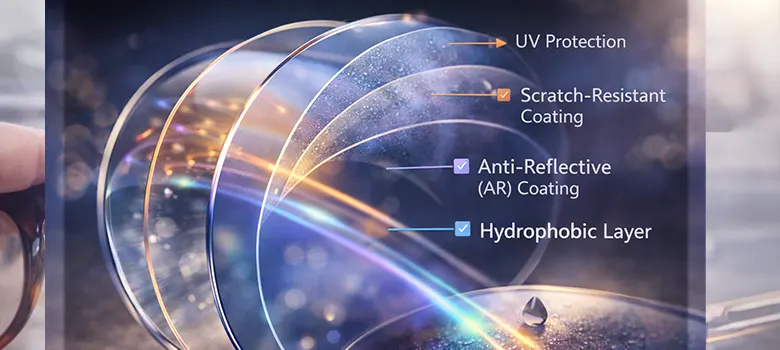
- Anti-reflective coatings (this matters more than blue light filters)
An anti-reflective coating reduces glare more effectively than most blue light filters.
That’s something people don’t hear enough.
Final Thoughts
Blue light glasses are not a scam.
But they are not a miracle solution either.
They may improve comfort.
They may help with late-night screen exposure.
They are unlikely to dramatically change eye strain by themselves.
The biggest improvement comes from screen habits and proper lens coatings.
Comfort matters.
But clarity matters more.