You’ve probably seen them before. Glasses with lenses so thick they almost magnify the person’s eyes from the side. Sometimes the edges stick far outside the frame.Sometimes the lenses look heavy or bulky. And a lot of people wonder: “Why does that happen?” The answer comes down to a combination of prescription strength, lens material, …
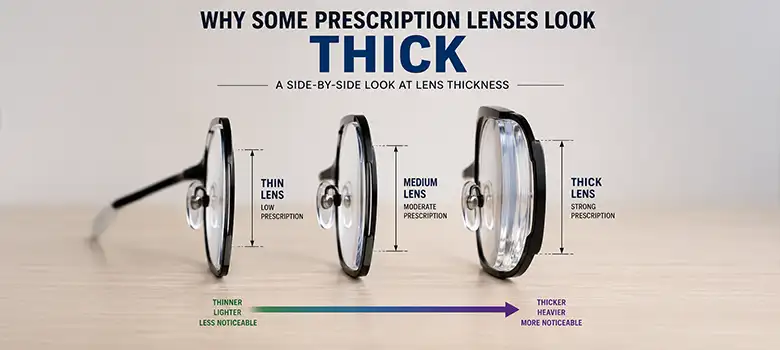
You’ve probably seen them before.
Glasses with lenses so thick they almost magnify the person’s eyes from the side.
Sometimes the edges stick far outside the frame.
Sometimes the lenses look heavy or bulky.
And a lot of people wonder:
“Why does that happen?”
The answer comes down to a combination of prescription strength, lens material, and frame choice.
The good news?
Modern lens technology can dramatically reduce thickness in many cases.
The Stronger the Prescription, the Thicker the Lens
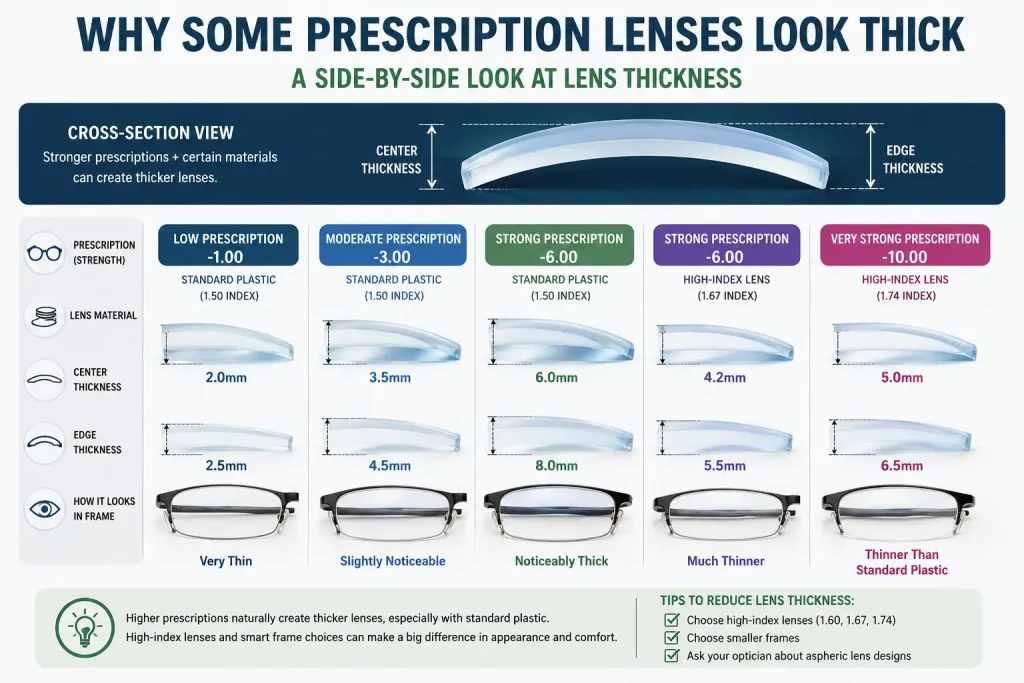
This is the biggest reason.
Higher prescriptions require lenses to bend light more aggressively.
That extra correction usually means:
- thicker edges for nearsighted prescriptions
- thicker centers for farsighted prescriptions
The stronger the prescription, the more noticeable the thickness becomes.
Large Frames Can Make Thickness Worse
This surprises a lot of people.
Bigger lenses require more lens material, especially around the edges.
That means oversized frames can sometimes make thick lenses look even thicker.
Smaller frames often help reduce the appearance of lens bulk.
Cheap Standard Lenses Are Usually Thicker
Basic plastic lenses work fine for many prescriptions…
…but stronger prescriptions often benefit from high-index lenses.
High-index materials are designed to:
- bend light more efficiently
- reduce thickness
- reduce weight
- create a cleaner appearance
That’s why many premium lenses look noticeably slimmer.
Lens Shape Matters Too
Some frame shapes naturally expose more lens edge thickness than others.
For example:
- rimless frames can make thick edges more noticeable
- certain metal frames expose the side profile more
- thicker acetate frames can help hide lens edges
Optical design plays a bigger role than most people realize.
Why Thick Lenses Sometimes Distort the Eyes
Ever notice how some glasses make eyes appear:
- unusually large
or - unusually small?
That’s caused by lens magnification.
Strong prescriptions change how light passes through the lens, which can visually alter eye size depending on the prescription type.
Modern lens designs can help reduce this effect.
Today’s Lenses Are WAY Better Than Older Ones
A lot of people still picture the thick “coke bottle” lenses from years ago.
But lens technology has improved dramatically.
Today, thinner high-index lenses combined with better frame selection can create a much cleaner, lighter-looking pair of glasses.
Even for stronger prescriptions.
Sometimes You Don’t Need New Frames
If you already love your current frames, replacing the lenses with thinner high-index options may dramatically improve:
- appearance
- comfort
- weight
- clarity
without buying completely new glasses.
Final Thoughts
Thick prescription lenses are usually caused by:
- stronger prescriptions
- larger frames
- older lens materials
But modern lens technology offers better solutions than ever before.
And in many cases, the right lenses can make a bigger difference than the frames themselves.