When you invest in prescription lenses, you want them to last. The reality, however, is that lenses have a lifespan. Over time, exposure to elements like UV rays, temperature changes, and daily wear and tear causes coatings to degrade and clarity to fade. The big question is: How long do prescription lenses actually last? In …
When you invest in prescription lenses, you want them to last. The reality, however, is that lenses have a lifespan. Over time, exposure to elements like UV rays, temperature changes, and daily wear and tear causes coatings to degrade and clarity to fade.
The big question is: How long do prescription lenses actually last?
In this article, we’re going to break it down, explain the factors affecting the lifespan of your lenses, and discuss when it might be time to replace them instead of just cleaning them again.
The Average Lifespan of Prescription Lenses
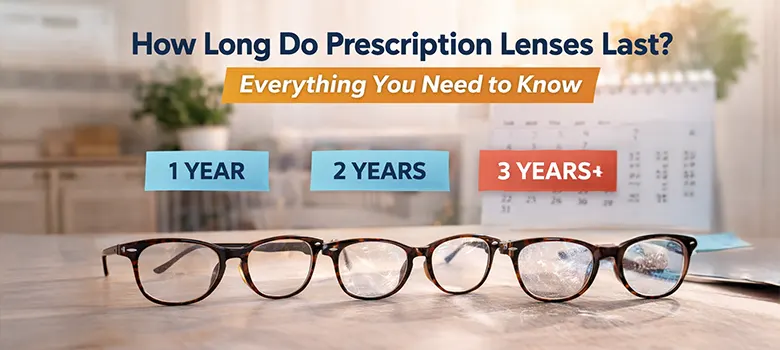
Generally, prescription lenses can last anywhere from 1–3 years depending on the materials, coatings, and how often they’re used.
Factors That Affect Lens Longevity:
- Coating Durability:
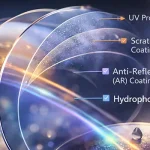
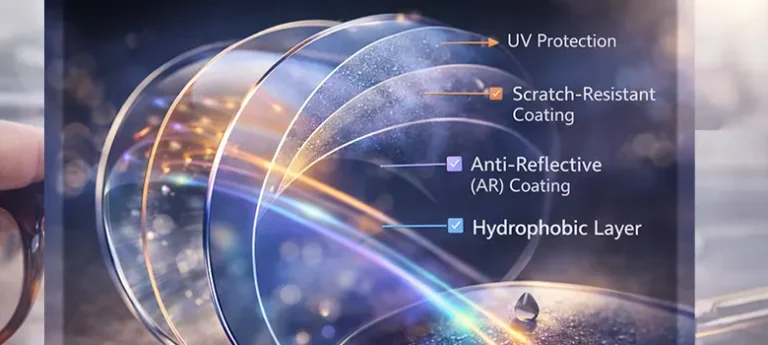
Lenses with anti-reflective (AR) coatings or scratch-resistant coatings can last about 1–2 years before showing significant wear. The coating begins to degrade, resulting in blurry vision, smudging, and glare. - Lens Material:
Standard plastic lenses typically have a lifespan of 1–2 years before noticeable damage occurs, whereas high-index lenses (thinner, stronger) may last longer. However, regardless of the material, they will eventually become scratched or worn. - Daily Wear and Exposure:
Daily activities like using your glasses during outdoor sports, wiping them on your clothing, and leaving them in hot cars can cause the coatings to wear down faster. Lenses exposed to harsh environments might need replacing sooner. - Prescription Changes:
Prescription updates are another reason to replace lenses. Over time, your vision changes, and so does your prescription. When you update your glasses with a new prescription, it’s often the right time to get fresh lenses that match.
Signs Your Lenses Are Ready for Replacement
- Increased Glare and Reflection:
If you’re noticing more glare, especially when driving at night, your anti-reflective coating may be wearing off. This is a clear indicator that it’s time to replace the lenses. - Visible Scratches:
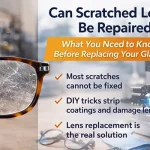
While some scratches are inevitable, multiple visible scratches can severely affect the clarity of your vision. Lenses that are covered in scratches don’t just look bad — they distort your view. - Worn Coatings:
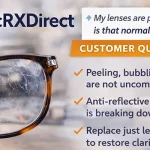
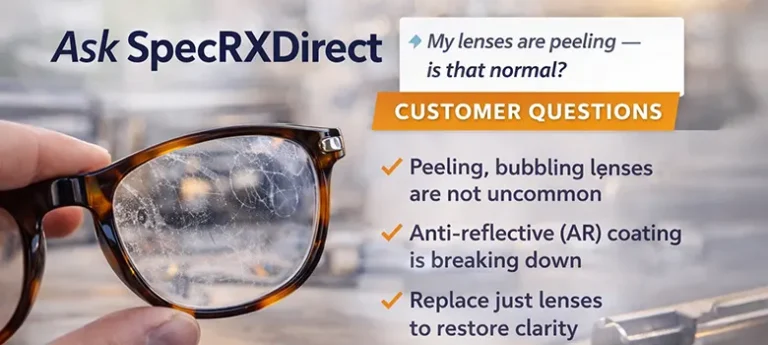
If your lenses feel “sticky” no matter how many times you clean them, the coating has likely started to peel. This breakdown can result in blurry vision. - Fogging and Smudging:
When lenses become permanently foggy or smudge quickly, it’s another sign that coatings are wearing thin.
When to Replace vs. Repair
It’s essential to understand the difference between repairing and replacing lenses. While some lenses can be polished or resurfaced, most prescription lenses should be replaced when:
- Coatings Fail: Once coatings start to break down, there’s no way to restore their functionality — they need to be replaced.
- Major Scratches: Scratches compromise the integrity of the lens and distort vision.
- Your Prescription Changes: If your prescription has shifted, the lenses need to be swapped to avoid straining your eyes and worsening your vision.
The Cost of Waiting: Why Waiting to Replace Lenses Can Hurt Your Eyes
It might seem like a good idea to delay lens replacement, but here’s why that’s a mistake:
- Strain on Your Eyes:
Worn lenses force your eyes to work harder, which can lead to headaches, eye fatigue, and long-term vision problems. - Increased Glare and Distortion:
As lenses degrade, they scatter light. This makes it harder to see clearly, especially when driving at night. - Damage to Your Frames:
Sometimes, scratched lenses can damage the frame itself, leading to more expensive repairs or replacement.
When Should You Get New Lenses?
It’s time to get new lenses if:
- Your prescription has changed and your vision is blurry
- Your lenses are scratched, scratched beyond repair, or are visibly worn
- You notice more glare and reflection than before
- You’ve had your lenses for over 2 years
Conclusion
Prescription lenses have a limited lifespan, but replacing them at the right time will restore your vision and save you money in the long run. Don’t wait until your vision is compromised or your lenses are visibly worn. Lens replacement is more affordable than buying new frames, and it’s the smarter choice for your long-term eye health.