Most people assume lenses fail because they “did something wrong.”Used the wrong cloth. Cleaned them too often. Didn’t baby them enough.That’s rarely the real reason.The truth is: prescription lenses are consumable. They wear out over time, even when you take good care of them.Let’s break down why. 1. Lens Coatings Wear Down - Even With Proper …
Most people assume lenses fail because they “did something wrong.”
Used the wrong cloth. Cleaned them too often. Didn’t baby them enough.
That’s rarely the real reason.
The truth is: prescription lenses are consumable. They wear out over time, even when you take good care of them.
Let’s break down why.
1. Lens Coatings Wear Down – Even With Proper Care
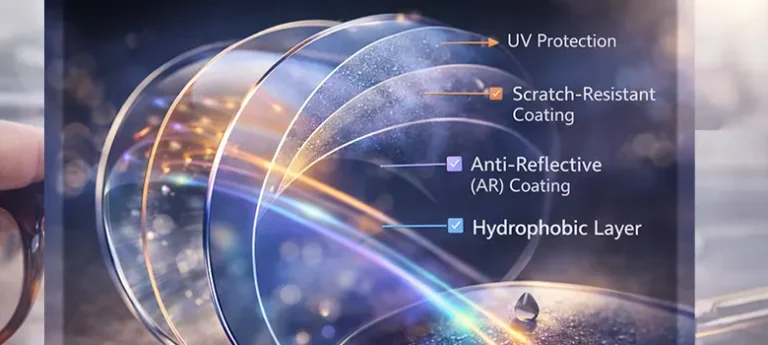
Modern lenses rely heavily on coatings:
- Anti-reflective layers
- Scratch-resistant coatings
- UV protection
- Blue light filters (on some lenses)
These layers are incredibly thin. Over time, daily cleaning, temperature changes, and normal use slowly break them down.
That’s why lenses can start to look:
- Hazy
- Smudgy no matter how much you clean
- Glare-heavy at night
At that point, cleaning harder doesn’t help, the coating itself is degrading.
2. Micro-Scratches Are Inevitable
You may not see them, but they’re there.
Micro-scratches form from:
- Dust particles on lenses or cloths
- Rinsing lenses under tap water with mineral residue
- Everyday contact with surfaces, cases, and pockets
Individually, they’re tiny. Collectively, they scatter light and reduce clarity.
This is why lenses can feel “off” even if they don’t look badly scratched.
3. Heat, Cold, and Humidity Take a Toll
Lenses go through a lot:
- Hot cars
- Cold air conditioning
- Steam from showers
- Sweat and skin oils
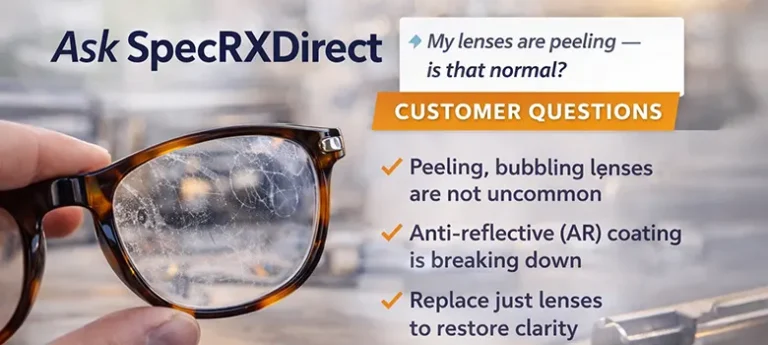
These temperature swings cause coatings to expand and contract at different rates than the lens material underneath. Over time, this leads to peeling, crazing, or cloudy patches.
Again, not user error. Just physics.
4. Cleaning Can’t Fix Structural Wear
This is the hard truth most people don’t hear:
Once coatings are compromised, cleaning no longer restores clarity.
You can remove dirt and oils, but you can’t fix:
- Worn anti-reflective layers
- Embedded micro-scratches
- Chemical breakdown of coatings
That’s when lenses feel permanently “dirty,” even when they’re clean.
5. Lenses Age Faster Than Frames
Frames are built to last. Lenses aren’t.
Most quality prescription lenses are designed to perform well for 1-3 years, depending on use, environment, and coating type.
That’s why so many people love their frames, but struggle with the vision through them.
And that’s exactly where lens replacement makes sense.
When It’s Time to Replace Lenses
You should start considering lens replacement if:
- Vision feels dull or strained
- Night driving glare has increased
- Lenses never look truly clean
- Coatings are peeling or cloudy
- Your prescription has changed slightly
Replacing lenses restores clarity without forcing you to buy new frames.
The Takeaway
Lens failure isn’t about negligence.
It’s about wear, materials, and time.
Understanding why lenses fail helps you make better decisions, and avoid wasting money replacing frames you don’t need to replace.
Clear vision isn’t about cleaning harder.
Sometimes, it’s about replacing smarter.